Cops Stop Elderly Black Woman Outside Bank — She Calls Her Son, the U.S. Attorney General
Cops Stop Elderly Black Woman Outside Bank — She Calls Her Son, the U.S. Attorney General 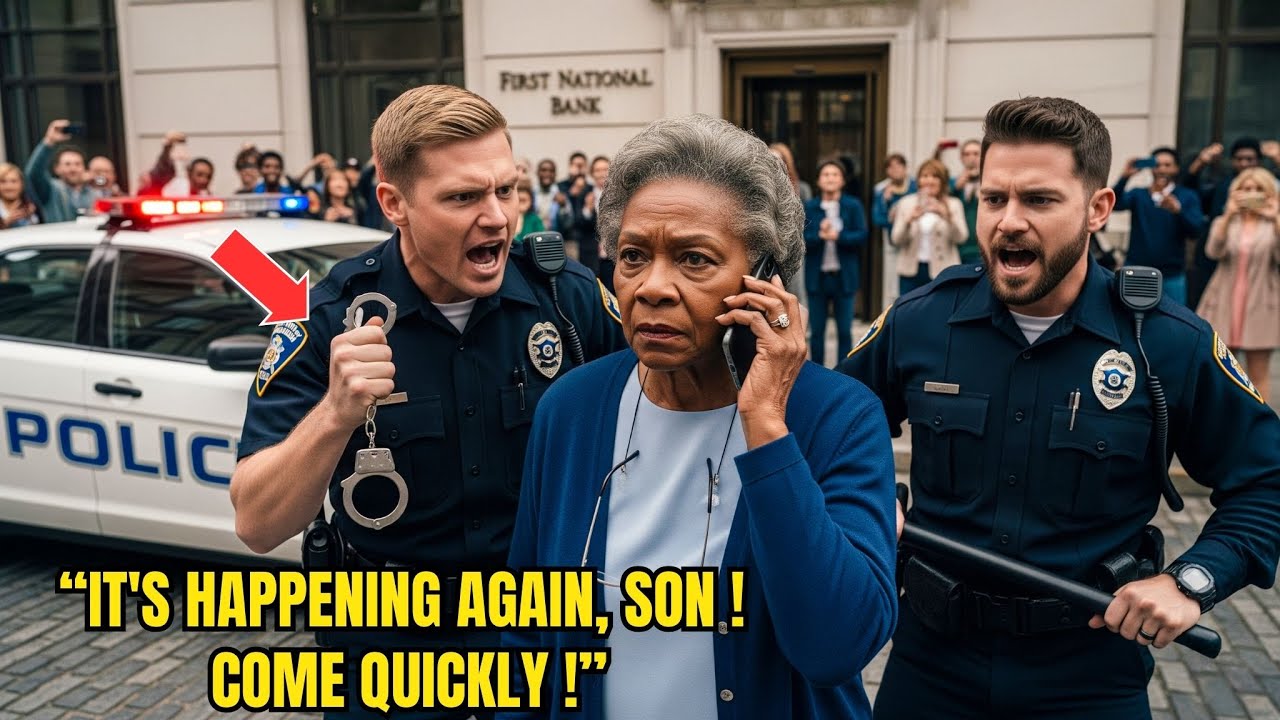
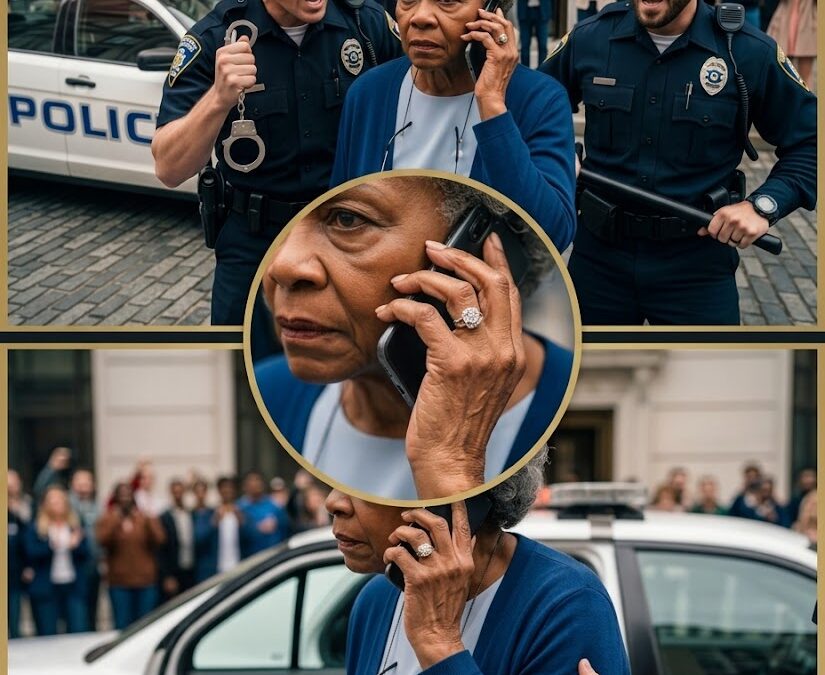
Get on your knees, Grandma. Now. Officer Daniels shoves Margaret Thompson against the police cruiser. Blood rushes to her face. 72 years of dignity crumbles in public view outside First National Bank. Daniels seizes her purse, violently dumps everything onto the hood. Wallet, keys, phone, ID card, crashes to pavement.
Officer Miller stomps on her license, grinds his heel. This account has millions. No way it belongs to someone like you. Margaret’s voice doesn’t waver. I’ve banked here since before you were born. Miller kicks her ID into the gutter. Got real identification or should we take this downtown? Margaret reaches for her phone. Daniels slaps her hand away. I said freeze.
Her eyes blaze with something beyond anger. Calculation. Patience, power. Little do they know who’s waiting for Margaret’s emergency call. Margaret parks her modest sedan in the bank’s lot. She checks her appearance in the mirror. Pearl earrings, pressed blouse, hair neatly pinned. Today, she’ll withdraw funds for her grandson’s college tuition.
Inside First National Bank, customers receive prompt service. But when Margaret approaches the counter, teller Brian gives her a dismissive glance. How can I help you? His tone lacks the warmth he showed previous customers. I’d like to withdraw $15,000 from my account. Margaret slides her ID and bank card across the counter.
Brian’s eyebrows raise. He examines her ID closely, comparing it to her face multiple times. This is a significant sum. Do you understand what you’re asking for? Margaret has held this account for decades. Yes, I understand banking transactions. Brian whispers to his manager, Sandra, who approaches with crossed arms. There seems to be a problem with your request.
Margaret stands straight. What problem? We need to verify your identity further. These fraud prevention measures protect people like you. Margaret notices Sandra doesn’t question the ID of the younger white customer at the next window making a similar withdrawal. People like me, Margaret asks. Sandra ignores the question. Wait here.
She disappears into a back office. Margaret’s ID and bank card in hand. Through the window, Margaret sees Sandra speaking to security guards who glance at her repeatedly. One guard makes a call, his eyes never leaving Margaret. Outside, a police cruiser pulls up. Margaret clutches her purse tighter. The retirement gift from her son rests inside.
A special phone with a single button for emergencies. She never thought banking would become an emergency. The approaching officers have already decided what kind of woman Margaret is, and it’s not the account holder of $1.2 million. Officers Daniels and Miller enter the bank. Sandra immediately directs them to Margaret. The bank falls silent.
Other customers stare. “Ma’am, step outside with us.” Officer Daniels gestures toward the door. Margaret stands firm. I’ve done nothing wrong. I’m a customer withdrawing my own money. Miller steps closer. We can do this the easy way or make a scene. Your choice. Margaret walks outside with dignity. her back straight despite her pounding heart.
In the parking lot, away from witnesses, their tone changes. We’ve had several fraud cases involving elderly accounts. Daniels positions himself to block Margaret’s path back to the bank. I’m simply withdrawing money for my grandson’s tuition. Margaret opens her purse for her secondary ID. Miller misinterprets the movement. His hand moves to his weapon.
Keep your hands where we can see them. Margaret freezes. I’m getting my passport slowly. Daniels watches her every move. She produces her passport perfectly valid. Miller barely glances at it. This could be fake, too. These scammers have good forgeries now. Margaret’s frustration builds. Call my son.
He’ll verify who I am. Daniels laughs. Everyone has a son who will fix everything. Inside the bank, customers press against windows. No one intervenes. Sandra watches with arms crossed, vindicated. Margaret notices Brian looking uncomfortable, but silent. I’ve banked here since before you were born, Margaret tells the officers.
My late husband and I opened this account in 1980. Right, Miller says. And I’m sure you drive a Mercedes, too. Margaret thinks of her son’s warning last Christmas. Mom, sometimes people won’t see your worth until you show them your power. She hadn’t understood then. She does now.
As the officers radio for backup, they don’t notice Margaret’s fingers carefully pressing the emergency button on her phone. The situation intensifies as a small crowd gathers at a distance. Officer Daniels demands Margaret’s purse. We need to check for false identification documents. Margaret holds her ground. You have no right to search my belongings without cause.
Obstruction, Miller mutters. That’s cause enough. They take her purse anyway. Daniels dumps the contents onto the patrol car’s hood. wallet, tissues, lipstick, reading glasses, phone, and a small framed photo of her family scatter across the hot metal surface. Margaret reaches for the photo as it slides toward the edge. Miller blocks her.
Don’t touch anything. The frame falls, glass shattering on the pavement. Margaret’s son’s face smiles up from the cracked frame. That’s my family. Her voice trembles. ID fraud is a family business now. Daniels picks through her wallet, removing cards, examining each with exaggerated scrutiny.
Margaret notices her hand shaking. She clasps them together to hide her humiliation. Social security cards don’t look like this anymore, Miller says. Though Margaret’s card is perfectly authentic. That card was issued in 1968. Her patience wears thin. convenient excuse. Miller places her belongings in an evidence bag, including her phone.
Margaret’s stomach tightens stomach. The emergency call had connected. Her son would have heard everything. A third officer arrives. Johnson surveys the scene immediately, deferring to his colleagueu’s assessment without questioning. Ma’am, we’re taking you in for questioning regarding identity fraud. Margaret straightens her spine.
I want to speak to my attorney. The officers exchange amused glances. You have an attorney on retainer? Daniels snickers. I do. Margaret’s voice finds new strength. And he’s very good at his job. Officer Johnson steps closer, intimidating. Until then, you’ll come with us. Margaret feels the stairs of onlookers. Some film with their phones.
None intervene. Sandra emerges from the bank holding paperwork. Her account shows unusual activity. Large deposits quarterly from Washington. Government fraud, too. Miller raises his eyebrows. That’s federal territory. Margaret almost laughs. If only they knew the source of those deposits. As they prepare to handcuff her, Margaret speaks clearly.
Before you continue, I suggest you check my other identification. What other ID? We’ve seen your fake driver’s license and passport. Margaret stands tall. The one my son insists I carry in the hidden compartment of my wallet. When Officer Daniels reluctantly checks, his face drains of color as he reads the emergency contact information on the special governmentisssued family ID.
The atmosphere shifts as Daniels stares at the ID card, suddenly unsure. He shows it to Miller, whose cocky demeanor falters. Meanwhile, in Washington, DC, Attorney General Elijah Thompson is concluding a meeting when his security detail interrupts. Sir, you have an emergency call from your mother’s panic button.
Elijah’s expression hardens as he listens to the audio transmission. his mother’s voice, the officer’s dismissive tones, the sound of her belongings scattered across a car hood. He hears everything. Get me the police chief in that jurisdiction now. His voice remains measured but cold. And prepare my plane. Back at the bank, Margaret notices the change in the officer’s behavior.
This says your emergency contact is Miller trails off. My son, Elijah Thompson. Margaret’s voice carries quiet strength. Johnson shakes his head. That can’t be right. The attorney general. The same. Margaret meets his gaze. My son values family above all else. Daniels fumbles with his radio, steps away to make a call.
His posture changes from authoritative to defensive. Margaret uses their distraction to assess the damage. Her belongings remain scattered. Her dignity challenged. Her community failed to stand up for her. She makes a silent vow. This treatment won’t happen to anyone else at this bank. Inside, Sandra watches with growing concern.
The manager appears beside her, questioning the police presence. Brian, the teller, approaches them nervously. Her account details check out. She’s been a customer for decades. Premium account holder. The manager’s face pales. Why wasn’t I informed immediately? Brian swallows hard. Sandra said she matched a fraud profile. What profile? The manager demands.
Sandra stammers. She wanted to withdraw a large sum. It seemed suspicious. Because she’s elderly. Black. The manager’s voice rises. Outside. Daniels returns. His demeanor completely transformed. Mrs. Thompson, there seems to have been a misunderstanding. Margaret says nothing. The time for explanations has passed.
We’ll need to verify this ID. Of course, Miller adds weekly. Of course you will. Margaret’s voice is ice. And while you’re at it, perhaps explain why my valid identification was insufficient before you knew who my son was. Johnson begins gathering her belongings, handling them with new care. Daniel’s radio crackles.
The voice on the other end sounds urgent. Margaret knows that voice. Elijah’s distinctive tone carries authority even through the static. The officer’s face drains of color as he listens. Yes, sir. Understood, sir. Right away, sir. The patrol car’s lights shut off. The evidence bag opens. Margaret’s belongings return to her hands with apologies, but it’s too late for sorry.
30,000 ft above, the attorney general’s plane changes course, heading directly toward his mother, and a reckoning none of these officers are prepared to face. News travels fast in small towns. Within an hour, local media vans appear outside the bank. Someone leaked that something big is happening. Inside the bank, the manager scrambles.
Get Mrs. Thompson into my office immediately. Full privacy. Sandra protests. She was trying to withdraw an unusual amount. She’s a premium client with over a million dollars in assets with us. The manager hisses. And you called the police because Sandra falters. She didn’t look like she could have that kind of money.
The manager stares in disbelief. I’ll deal with you later. Outside, officers Daniels and Miller receive increasingly frantic calls from their superior. Do you have any idea who you’ve detained? The police chief’s voice booms through the radio. The attorney general himself called our department. Margaret sits calmly on a bench, declining offers to wait inside.
I prefer to stay where everyone can see what happens next, she tells them. The officers hover nervously nearby, no longer detaining her, but unwilling to leave the scene. Daniels approaches hesitantly. Mrs. Thompson, we were just doing our jobs. Margaret looks through him. Your job is to protect and serve all citizens equally.
Miller joins defensive. We had reports of fraud. From whom? Margaret challenges. the bank teller who decided I didn’t look like I belonged. Neither officer answers. More patrol cars arrive. The police chief emerges, straightening his uniform before approaching Margaret. Mrs. Thompson, on behalf of our department, I extend my sincerest apologies for this unfortunate incident.
Margaret’s response is measured. Unfortunate suggests accident. This was deliberate profiling. The chief’s smile falters. I assure you we’ll conduct a full investigation. So will my son, Margaret replies. Social media buzzes with partial videos of the incident. Comments flood in. Another case of banking while black.
And wait until they find out who she is. The bank manager emerges, sweat beating on his forehead. Mrs. Thompson, please come inside. We’ve prepared everything for your withdrawal. As Margaret finally enters the bank, a sleek black government vehicle pulls into the parking lot, followed by three more, and the real storm hasn’t even begun.
The government vehicles form a perimeter around the bank entrance. Men and women in suits with earpieces create a corridor of authority. Inside, the bank manager personally counts out Margaret’s withdrawal, hands shaking. Mrs. Thompson, I want to assure you that First National values all our customers. This incident doesn’t reflect our policies.
Margaret accepts the cash, placing it carefully in her purse. Yet, it happened in your bank under your supervision. Sandra has been removed from the floor. Through the office blinds, Margaret sees her gesturing frantically to HR personnel. Brian, the teller, approaches cautiously. Mrs. Thompson, I’m truly sorry.
I should have verified your account before involving security. Margaret studies him. Yes, you should have. The manager interjects. We’re prepared to offer compensation for your distress. I don’t want your money, Margaret interrupts. I want systemic change. A commotion outside draws everyone’s attention.
The bank falls silent as Attorney General Elijah Thompson enters, flanked by his security detail and assistance carrying briefcases. At 64, Elijah commands the room instantly. His tailored suit and deliberate movements speak of power held with responsibility. The police chief rushes forward. Attorney General Thompson, we’re handling the situation.
Are you? Elijah’s voice cuts through excuses. His focus remains on his mother. He crosses to Margaret, concern breaking through his professional facade. Mom, are you all right? For the first time, Margaret’s composure waivers. She pats his hand. I’m fine, Elijah, but others might not be so fortunate. Elijah turns to his team.
full investigation, bank policies, police response, individual actions, everything. One assistant steps forward. Sir, we’ve already pulled seven similar complaints against this branch in the past year. The manager pales. Those were resolved through settlements and NDAs. The assistant finishes. Not anymore. Officers Daniels and Miller attempt to blend into the background.
Elijah notices. Officers, my team will need your badge numbers and full statements. The local news crews outside multiply. National outlets have picked up the story. Attorney General’s mother profiled at bank. As Elijah guides his mother toward the exit, he whispers something that makes her smile for the first time today.
Something about teaching a masterclass in consequences. The bank’s regional director arrives breathless, having broken speed limits to get there. He finds the lobby transformed into an impromptu command center. Department of Justice staff set up workstations. Officials interview employees and review security footage.
The bank’s computer systems undergo audit. The regional director seeks out Elijah. Attorney General Thompson, surely we can handle this privately. Elijah looks up from reviewing documents. like the previous incidents were handled with silence and payoffs. Margaret sits nearby observing. She notices Sandra being escorted to a private room for questioning.
Her earlier confidence completely vanished. Outside, community members gather. Word has spread about what happened to Miss Margaret, a beloved former school teacher who tutored generations of local children. Former students arrive with handmade signs. Justice for Miss Margaret and end banking discrimination. Now the police chief attempts damage control with the media.
This was an isolated incident. He’s interrupted by community voices shouting incidents of their own. They did the same to my grandfather. I was denied a loan six times with perfect credit. Margaret watches through the window, her personal humiliation transforming into something larger. This isn’t just about her anymore.
Elijah approaches his mother. The Federal Banking Commission is sending representatives. This branch’s practices warrant full review. Margaret nods. What about the officers? Administrative leave pending investigation. Elijah’s expression darkens. Their body cameras conveniently malfunction during your encounter.
Convenient indeed. Margaret straightens her pearl necklace. What happens next? Justice happens next. Elijah checks his watch. The bank’s CEO is landing in 20 minutes. The police commissioner in 30. The regional director overhars. Panic evident. The CEO is coming here today. When the attorney general’s mother is profiled and humiliated, people tend to clear their schedules.
Elijah’s tone leaves no room for discussion. Margaret stands, smoothing her skirt. I should freshen up before meeting the CEO. As she heads to the restroom, bank employees watch in silence. The woman they dismissed hours ago now commands more respect than their highest executives. In the privacy of the bathroom, Margaret finally allows herself a moment of emotion.
not for her own ordeal, but for the revelation of how many others suffered without the power of a son in high office. The bank’s atmosphere crackles with tension as the CEO of First National Banking Corporation, Harrison Edwards, strides through the doors. His tailored suit and confident demeanor suggest a man accustomed to controlling rooms, not answering to them.
Behind him follows police commissioner Davis, whose military posture contrasts with the anxiety in his eyes. They find Attorney General Thompson reviewing evidence with his team. The Justice Department’s efficiency has already compiled a damning report. “Attorney General,” Edwards extends his hand.
“This unfortunate incident was neither unfortunate nor isolated,” Elijah interrupts, not taking the offered hand. “My team has identified 27 similar incidents at your branches nationwide in the past year alone.” Edwards falters. I wasn’t aware. That’s the problem. Elijah gestures to the stack of complaints. Your bank settled these quietly.
No policy changes, no accountability. Margaret returns composed and regal. Edwards immediately approaches her. Mrs. Thompson, please accept my personal apology for your experience today. Margaret studies him. Do you know why I was withdrawing money, Mr. Edwards? The CEO hesitates. I understand it was for your grandson’s tuition. Partially correct.
Margaret opens her purse, retrieving an elegant business card. The Thompson Family Foundation is establishing a scholarship fund for underprivileged students. Today’s withdrawal was the first installment. Edwards examines the card. Recognition dawning. The Thompson Foundation, a powerful philanthropic organization with assets exceeding $50 million.
You’re that Margaret Thompson? His voice barely contains his shock. The very same. Margaret’s smile doesn’t reach her eyes. Former chief financial officer of Westland Industries before my retirement. The revelation ripples through the room. The elderly woman they profiled isn’t just the attorney general’s mother.
She’s a financial powerhouse in her own right. I started as a bank teller in 1968. Margaret continues, “Worked my way through night school while raising Elijah alone after my husband died. Became the first black female CFO in our state’s history.” Commissioner Davis clears his throat. Mrs.
Thompson, had our officers known, that’s precisely the problem. Margaret cuts him off. Respect shouldn’t depend on status or connections. Elijah steps forward. My mother sits on the Federal Reserve Advisory Council. She helped draft banking regulations you operate under, Mr. Edwards. The CEO pales visibly. And yet, Elijah continues, she was treated like a criminal in your establishment because of assumptions based on her age and race.
Margaret addresses the room. I could have presented my credentials immediately. I chose not to. Why? Sandra asks from the edge of the gathering. Because no one should need impressive titles to be treated with basic dignity. Margaret’s voice carries decades of wisdom. today revealed the treatment ordinary citizens receive.
The assistant attorney general approaches with a tablet. Sir, we’ve compiled the initial report. Systematic discrimination patterns are evident. Edwards attempts to regain control. Whatever policy adjustments are needed, this goes beyond policy adjustments. Elijah’s tone is final. The Department of Justice is opening a formal investigation into discriminatory practices at First National Bank.
The CEO stiffens. On what grounds? Violation of the Equal Credit Opportunity Act, the Fair Housing Act, and potentially the Civil Rights Act. Elijah lists each charge deliberately, and that’s before addressing the police misconduct. Commissioner Davis interjects. The officers were responding to a reported fraud with excessive force and clear bias.
Elijah finishes their body cameras mysteriously malfunctioned only during this encounter. Outside, the crowd has grown. Community members share stories of similar treatment. News crews broadcast live. Margaret watches it all. Her banker’s mind calculating the impact. Your stock will drop 15 points by morning, Mr. Edwards. The CEO knows she’s right.
As Margaret prepares to leave with her son, she turns to the assembled bank leadership with one final revelation. By the way, I’ve served on your bank’s board of directors selection committee for the past decade, and your term review is next month. One week later, the consequences unfold with the precision of dominoes falling.
First National Bank’s stock plummets 18%. Worse than Margaret predicted. Shareholders demand answers. The board calls an emergency meeting. At Justice Department headquarters, Elijah leads a briefing on the widening investigation. We’ve received over 200 new complaints since news broke.
He gestures to the map showing affected branches nationwide pattern and practice of discrimination, particularly against elderly minorities. His team presents evidence, internal bank memos encouraging scrutiny of unusual withdrawals with coded language about non-typical account holders. Meanwhile, Margaret hosts community leaders in her modest home.
The living room transforms into a command center for systemic change. It’s not enough to punish individuals, Margaret tells them. We need to change how financial institutions operate. Across town, officers Daniels and Miller face separate disciplinary hearings. Body camera footage from prior incidents reveals a pattern of selective enforcement.
Daniels argues, “We were following training protocols for fraud prevention.” The review board chairperson responds, “Yet white customers making identical transactions faced no such scrutiny.” At First Nationals headquarters, CEO Edwards faces the board’s fury. This PR disaster has cost us millions, one board member fumes.
Major institutional investors are threatening to devest. Edwards defends himself. How could I know every incident at every branch? That’s literally your job. Another board member counters. And Mrs. Thompson isn’t just anyone. She literally helped write banking regulations. Sandra, the bank manager who initiated the incident, clears her desk under security supervision.
Her termination letter cites violation of customer dignity protocols and discriminatory actions. Brian, the teller, receives different news. His honest testimony about systematic bias earns him whistleblower protection and a transfer to corporate compliance. Margaret declines all media interviews except one with a local high school journalism student whose grandmother faced similar discrimination.
This isn’t about revenge, Margaret explains. It’s about reform. The Justice Department at investigation expands to three more national banks with similar complaint patterns. Elijah recuses himself from direct involvement due to personal connection, but his top deputies press forward. Banking regulators announce emergency audits of complaint records and dispute resolutions across the financial sector.
First National announces a comprehensive plan, implicit bias training, transaction review overhaul, community accountability panels, and a $50 million commitment to underserved communities. Too little, too late. Class action lawsuits emerge. The bank’s legal team warns of potential 9-f figureure settlements.
At police headquarters, Commissioner Davis implements new protocols for responding to financial institutions. Verification before action becomes the mandate. Margaret uses her position on financial boards to push for industry-wide change. her proposal, blind transaction reviews, customer advocacy offices with real authority, and financial literacy programs in underserved communities.
The Thompson Family Foundation announces a new initiative, legal support for victims of financial discrimination nationwide. In a private meeting with Elijah, Margaret reviews the investigation’s progress. The systemic issues run deeper than we thought, Elijah explains. Their algorithms flagged accounts with specific withdrawal patterns as high risk when the account holders were minorities, but not for white customers with identical patterns. Margaret nods.
Technology embedded with the same biases as its creators. Exactly. And we found email chains where executives explicitly discussed varying complaints to avoid regulatory scrutiny. Margaret sips her tea. Any resistance from other banks? initially until we showed them the data. Now they’re falling over themselves to implement voluntary reforms before we compel them.
The fallout extends beyond banking. Police departments nationwide review their response protocols for calls from businesses. Training modules now include case studies on implicit bias in commercial settings. Sandra struggles to find new employment. Her interview at a smaller bank ends abruptly when the hiring manager recognizes her name from news coverage.
Officers Daniels and Miller receive formal reprimands in their personnel files. Their union representation argues against termination, securing their jobs but ensuring they’ll never advance beyond their current ranks. Edwards faces a shareholder revolt. The board chair calls him at home. We need your resignation by morning.
The damage control can’t begin with you still at the helm. The Thompson case becomes required reading in business ethics courses. Harvard Business School develops a case study. When bias meets banking, the true cost of discrimination. Margaret’s phone rings constantly with invitations to speak at financial conferences, civil rights events, and corporate training sessions.
She accepts selectively, focusing on forums where policy changes happen. Elijah’s political capital grows. His principled handling of his mother’s case demonstrates his commitment to equal justice regardless of personal connection. First Nationals competitors seize the opportunity, launching targeted marketing campaigns emphasizing their commitment to dignity for all customers.
account transfers from First National Surge. Brian receives a promotion to lead a new customer advocacy division, reporting directly to the board rather than management. His first initiative, anonymous transaction audits to eliminate bias. The financial industry’s trade publications debate the Thompson effect.
One editorial reads, “The question isn’t whether your institution has bias. It’s whether you’ll address it before your own Margaret Thompson walks through your door.” Shake. As bank executives across the country review their vulnerability to similar scandals, they discover something alarming. Margaret Thompson sits on advisory boards for regulatory agencies overseeing each of them.
60 days after the incident, a Senate Banking Committee hearing convenes. Marble columns and wood paneling create an atmosphere of gravitas as cameras broadcast nationwide. CEO Edwards occupies the witness table, flanked by nervous attorneys. Sweat beads on his forehead under the harsh lights.
Senator Claudia Morales leads the questioning. Mr. Edwards, your bank’s internal documents show systematic targeting of minority customers for enhanced scrutiny. Was this official policy? Edwards adjusts his tie. Absolutely not. These were isolated incidents of employees misinterpreting fraud prevention guidelines. Interesting. The senator holds up a document.
This memo from your executive team refers to demographic risk factors in transaction approval. Please explain. Edward stumbles through jargonfilled excuses. The committee remains unimpressed. In the audience, Margaret sits composed, watching the man who once commanded the financial world reduced to defensive mumbling.
During a recess, Edwards approaches her cautiously. Mrs. Thompson, surely we can find resolution without destroying an institution that serves millions. Margaret’s response is measured. Institutions that discriminate don’t truly serve anyone, Mr. Edwards. The hearing resumes with testimony from former customers.
Their stories form a damning pattern identical to Margaret’s experience, but without her resources or connections. Commissioner Davis faces his own reckoning before the Civil Rights Commission. Body camera reviews reveal a departmentwide pattern of different response standards based on caller demographics. Officers responded with full tactical teams to reports from affluent areas, the commission chair notes.
While similar calls from minority neighborhoods receive delayed or minimal response, Davis offers his resignation effective immediately. Back at the Senate hearing, Edwards attempts damage control. We’ve implemented comprehensive reforms. Senator Morales interrupts after getting caught. Your bank had hundreds of complaints before Mrs.
Thompson’s incident. The only difference was her son’s position. Edwards has no answer. The committee announces its findings. Sanctions against First National Bank, mandatory compliance audits, and referrals to the Justice Department for potential criminal charges against specific executives who buried complaints. That evening, First Nationals board votes unanimously.
Edwards is terminated, effective immediately. His golden parachute shrinks as clawback provisions activate due to leadership failures resulting in regulatory action. Officers Daniels and Miller receive their verdicts. Termination, loss of pension eligibility, and permanent notation in law enforcement databases preventing future police employment.
Sandra, the bank manager, finds herself unemployable in financial services. Her name becomes a case study in banking ethics courses. The bank’s regional director faces federal charges for destroying evidence of previous discrimination complaints. Community activists celebrate these individual consequences, but focus on Margaret’s bigger mission, systemic reform.
National News covers the story’s resolution. A prominent anchor concludes, “The swift fall of banking titan Harrison Edwards sends a clear message to corporate America. Discrimination isn’t just morally wrong, it’s financially catastrophic.” Margaret watches the coverage from home. her satisfaction tempered by awareness that most victims lack her advantages.
Elijah calls, “The president is considering an executive order on financial inclusion based on our recommendations.” “Good,” Margaret responds. “But legislation would be better. Executive orders change with administrations.” “Already working on it,” Elijah assures her. Senator Morales is drafting a bill now.
As the old guard falls, financial institutions scramble to avoid being the next target, unaware that Margaret has already provided the Justice Department with insider information on discriminatory practices at three more major banks. One year later, the financial landscape looks marketkedly different. Margaret’s experience has catalyzed change beyond individual penalties.
The Banking Equality Act passes with bipartisan support, establishing new standards for financial institutions. Anonymous transaction review protocols that remove demographic indicators. Mandatory reporting of all service refusals and their justifications. Customer advocates with real authority in every branch.
Quarterly bias audits with public results. First National Bank under new leadership transforms into an industry model. Their community banking initiative opens branches in previously underserved neighborhoods. Hiring practices prioritize staff reflecting community demographics. Margaret chairs the Federal Financial Inclusion Commission, a new regulatory body with oversight authority.
Her decades of financial expertise combined with personal experience make her uniquely qualified. Law enforcement undergoes similar transformation. New training protocols focus on equitable response regardless of neighborhood or caller demographics. Body cameras now activate automatically when officers respond to financial institutions.
The Thompson Foundation establishes a banking rights hotline providing immediate legal assistance to anyone experiencing discrimination. Their cases decrease month by month as reforms take hold. Former officer Daniels, now working security at a shopping mall, watches news coverage of the changes. His perspective has evolved from defensiveness to reluctant understanding.
Brian, the teller who spoke up, now leads First Nationals compliance department. His team reviews transaction patterns for bias indicators, addressing problems before they become incidents. In community centers nationwide, financial literacy programs flourish. Margaret personally teaches a monthly class for seniors navigating modern banking.
Police Commissioner Davis’s replacement, a former civil rights attorney, implements community oversight boards with actual disciplinary authority. The Justice Department’s Banking Discrimination Task Force, inspired by Margaret’s case, recovers over $500 million for victims of systematic discrimination across the financial sector.
Edwards, the former CEO, attempts to rehabilitate his image through philanthropic giving. His applications to serve on corporate boards receive consistent rejection. Sandra, working at a small retail shop, watches customers carefully count their money. She recognizes faces from her banking days. People she once dismissed now avoid her register.
At the annual banking industry conference, Margaret receives a standing ovation as she presents the new inclusive banking standards. Some executives applaud reluctantly, aware that resistance would be both feutal and revealing. Dignity isn’t a privilege reserved for the powerful, Margaret tells the audience.
It’s a right belonging to everyone who walks through your doors. As banking executives implement changes mandated by the new regulations, their data reveals an unexpected truthincclusive banking practices actually increase profits by expanding loyal customer bases. 2 years after the incident, Margaret sits in a different bank branch in the same town.
The space has been redesigned open, welcoming with privacy areas for all transactions. Her grandson, now in his second year of college, accompanies her. His scholarship fund, established through the Thompson Foundation, supports 15 students from underserved communities. The Young Teller greets Margaret with genuine respect. Good morning, Mrs.
Thompson. How can I assist you today? Margaret completes her transaction smoothly. No questions about her identification, no suspicious glances, just professional service. Outside, she notices Officer Johnson, the third officer from that day directing traffic. He’s undergone the mandatory retraining, now serving as the department’s community liaison.
He notices Margaret and nods respectfully. She returns the gesture without bitterness. Accountability has been achieved. Grudges serve no purpose. At her modest home, community leaders gather for their monthly strategy meeting. What began as response to one incident has evolved into ongoing civic engagement.
Margaret serves tea in her living room. Our work isn’t finished, but the foundation is stronger. Her phone rings. Elijah calling from Washington. She puts him on speaker. The president is signing the National Financial Inclusion Act tomorrow, he announces. Your testimony made the difference, Mom. Margaret smiles.
Not just mine, everyone who shared their stories. Later, she visits First National Bank’s main branch, now a community banking center with financial literacy classes and small business support services. Brian, promoted to regional director of community banking, gives her a tour. Applications for firsttime business loans are up 340% in minority communities.
Margaret examines the new transaction protocols on his tablet. Customer photos no longer appear during initial reviews. Accounts are evaluated on financial metrics alone. The system works better for everyone now, Brian explains. Even our shareholders are happier. A plaque in the lobby commemorates the transformation.
Dignity and respect for every customer. Below it, a smaller inscription, inspired by Margaret Thompson. She runs her fingers over the words, remembering that day’s humiliation now transformed into lasting change. At the police academy, new recruits study the Thompson case as mandatory curriculum. They learn about implicit bias, equitable enforcement, and the consequences of selective justice.
Sandra, who lost her banking career, now works at the community center. Her role teaching financial professionals about the human impact of discrimination. Her firstirhand experience proves valuable. Her redemption earned through genuine contrition and effort. Margaret drives home past the spot where officers once surrounded her.
The memory no longer stings. The sidewalk where her family photo shattered now features a small community garden. At home, she places fresh flowers beside her late husband’s photo. We did good work today, James. She opens her laptop to work on her memoir, Banking on Dignity. How one incident changed an industry. Publishers competed fiercely for the rights.
The evening news features a story about another bank’s community initiative inspired by First Nationals success. The movement spreads, driven by both moral imperative and proven profitability. Margaret’s phone buzzes with a message from her grandson. Grandma, my professor used your case study in class today.
She smiles, remembering something her mother told her decades ago. True power isn’t about making people fear you. It’s about making systems work justly for everyone. The lesson endures. Dignity isn’t negotiable. Justice delayed isn’t justice denied if it leads to lasting change. And sometimes the most powerful response to discrimination isn’t revenge, it’s reform.
As Margaret’s story reaches millions through her memoir and news coverage, the impact spreads beyond banking and law enforcement into other industries. Healthc care providers review their triage protocols after reports surface of similar bias. patterns. Retail chains implement blind shopper audits to ensure consistent service.
Educational institutions examine their disciplinary records for demographic disparities. Margaret appears on a national morning show, poised and dignified in the same pearl necklace she wore that fateful day. “What would you tell someone facing discrimination without an attorney general for a son?” the host asks. Margaret smiles. Document everything.
Connect with advocacy groups. Remember your worth doesn’t depend on others recognition. And know that for every Margaret Thompson with connections, we are building systems to support those without them. Social media campaigns spread her wisdom. Hatch dignity for all and hashtag banking. While black become rallying points for continued vigilance and reform.
The former bank building where the incident occurred has been renovated into a community financial center. Its new mission statement prominently displayed. Financial dignity is a universal right. Officer Daniels, working his mall security job, watches a teenager being unfairly accused of shoplifting. His new perspective leads him to intervene differently than he once would have.
Small changes ripple outward. Margaret establishes a scholarship for ethics in law enforcement available to children of police officers who demonstrate commitment to equitable justice. The Thompson Foundation launches a mobile app where users can report and track discrimination incidents, creating data patterns that drive further reforms.
First National Bank becomes the most profitable in its class, disproving critics who claimed inclusive practices would hurt bottom lines. Other institutions race to adopt similar models. Elijah continues his work as attorney general, his perspective forever shaped by his mother’s experience.
Policy reforms bear the subtle hallmark of personal understanding. Margaret’s story becomes a case study in business schools and law enforcementmies nationwide. Students debate the ethical implications and systemic changes required for true equality. At community meetings, citizens share their own stories of standing up against bias.
The conversation continues, each voice strengthening the movement. Did Margaret’s journey move you? This is just one of countless stories of dignity, power, and transformation. Every week, we bring you true tales of everyday people standing up against injustice and creating lasting change. Stories that make you think, feel, and most importantly, act.
Hit that like button if you believe in dignity for all. Subscribe to Beat Stories for more powerful narratives that prove one person can transform broken systems. Turn on notifications so you never miss our new releases every Thursday. Comment below with your own story of standing up against bias or discrimination. Your voice matters here.
You’ve seen the story. Now what will you do with it? At Beat Stories, we believe reflection is good, but action is better. Subscribe, share, speak, because awareness is only the first step.
You Might Also Enjoy
A Milionária Jogou o Dinheiro No Engraxate… Então Ele Voltou Para Comprar A Empresa Dela

O Empresário Riu Do Sonho Do Peão… Até Precisar De 8 Caminhões Dele Para Salvar A Fábrica

Dono Disfarçado Deixou A Carteira Para Testar A Garçonete… Até Ela Colocar O Próprio Dinheiro Dentro.

A Empresária Riu Quando a Costureira Pediu Demissão… Até Perder Seus Maiores Clientes Para Ela

A Costureira Salvou O Vestido De 40 Anos Da Mãe Do Milionário… Então Ele Bateu À Sua Porta