A Racist Gang Cornered a Black Woman in the Dark — Her SEAL Skills Made Them Regret It
A Racist Gang Cornered a Black Woman in the Dark — Her SEAL Skills Made Them Regret It 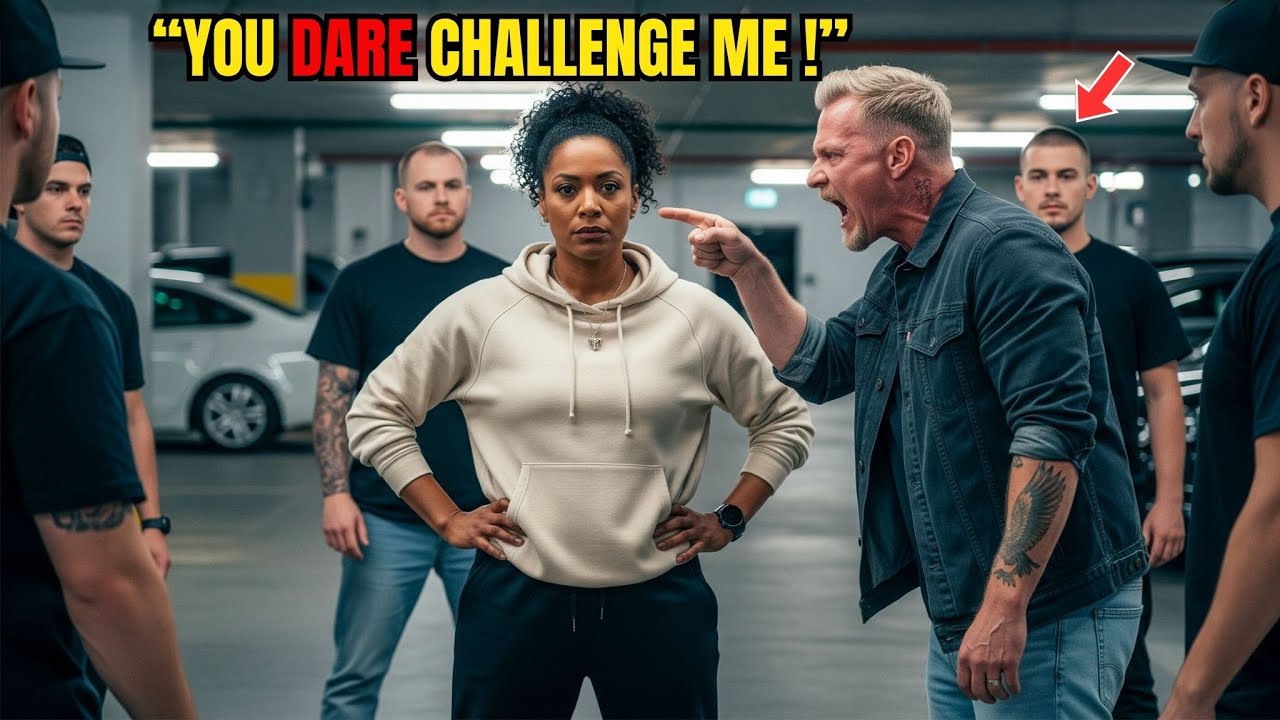
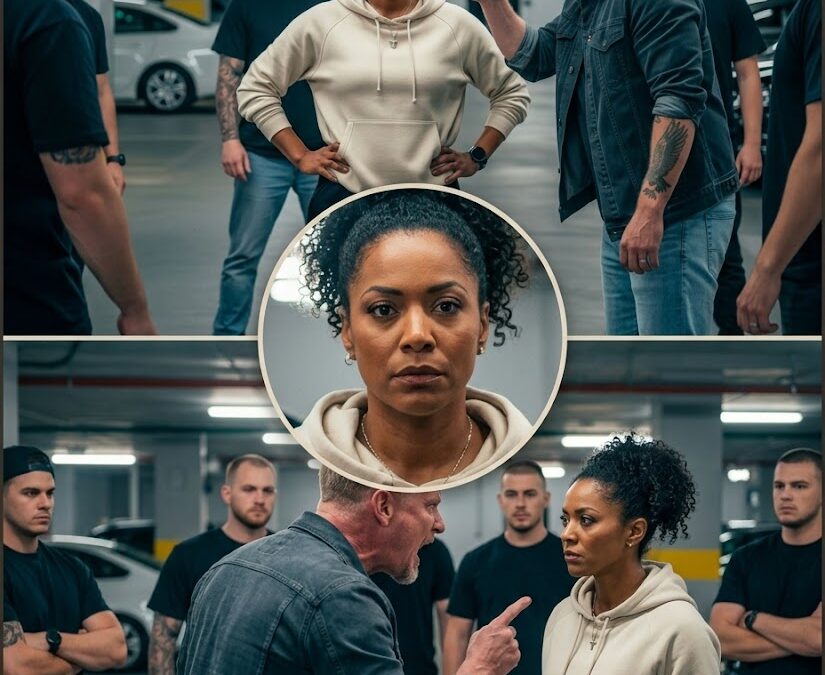
Looks like you took a wrong turn. This neighborhood isn’t for your kind. Five men surround Wilson in the deserted parking garage. Their leader steps forward. Ila’s heart pounds as she calculates escape routes. The men block all obvious exits, moving closer with predatory confidence. Their ring leader, a tall man with a distinctive tattoo, taunts, “No one to help you now.
No cameras, no witnesses.” What these men don’t realize, Leila Wilson isn’t just any target. Eight years as a Navy Seal combat specialist taught her exactly how to handle ambushes, even when outnumbered 5 to one. As the men close in, Ila’s expression shifts from frightened to calculating.
These attackers have no idea who they’ve cornered. Her eyes narrow as she identifies the weakest points in their formation. Earlier that day, Leila Wilson arrives in Westridge, a predominantly white suburban community where she’s purchased a home after retiring from naval special warfare. As she explores her new neighborhood, we witness subtle hostility, suspicious glances, residents crossing the street to avoid her, store clerks following her through aisles.
At a local coffee shop, Ila overhears conversations stop when she enters. The barista serves other customers first despite her being next in line. When Ila politely points this out, the barista begrudgingly takes her order but intentionally misspells her name as Laquisha on the cup. Outside, a group of men watch her from their table.
Their leader, Vincent Harker, mutters something that makes the others laugh. As Ila leaves, Vincent loudly comments, “Neighborhood’s really going downhill lately. property values won’t last with these new elements moving in. Ila ignores the comment, maintaining her composure. She’s faced worse in combat zones, but we see her mentally noting Vincent’s face, his distinctive tattoo, and the license plate of his truck as she leaves.
Flashback reveals Leila’s SEAL training. Learning to observe threats, memorize details under pressure, maintain situational awareness, her instructor’s voice, the difference between operators and civilians. We never stop assessing. Later, Ila meets her one friendly neighbor, an elderly woman named Helen, who welcomes her warmly.
Helen subtly warns Ila about some troublemakers in the area, mentioning Vincent and his friends have caused problems for other newcomers to the neighborhood. As Ila drives home that evening, she notices a truck following her, the same one from the coffee shop. She calmly takes an unexpected turn, confirming her suspicion. This isn’t random.
She’s being hunted. Her eyes narrow as she identifies the weakest points in their formation. That evening, Ila heads to the local grocery store. Inside, she encounters Vincent and two of his friends. They follow her through the aisles, making loud comments about cleaning up the neighborhood and people who don’t belong.
When Ila reaches the checkout, Vincent positions himself behind her in line. He intentionally bumps into her, then accuses her of backing into him. The cashier, clearly uncomfortable but unwilling to intervene, rushes through Ila’s transaction. In the parking lot, Vincent and his friends approach Ila as she loads groceries into her car.
They form a loose semicircle blocking her path back to the driver’s door. Vincent steps forward. You know, some folks around here are concerned about new people not understanding how things work in Westridge. Ila responds calmly. I understand exactly how things should work in America. Excuse me. She moves to step around them.
Vincent blocks her path. We’re just being neighborly, making sure you feel welcome. His tone makes the threat clear. Ila assesses three men overconfident, probably unarmed, but physically imposing. She notices security cameras covering the parking lot and other shoppers nearby. Not an optimal attack scenario for Vincent.
She makes eye contact with Vincent, her posture subtly shifting from civilian to operator. Something in her gaze, the absolute absence of fear, momentarily disconcerts him. Ila speaks quietly. I appreciate your concern for the neighborhood. I value community safety, too. The controlled precision in her voice causes Vincent to step back involuntarily.
A family with children walks nearby, disrupting the tension. Vincent forces a laugh, playing off the confrontation. Just having a friendly chat with our new neighbor. See you around. As they walk away, Ila overhears one friend asking, “Why’d you back off?” Vincent’s response, “Something’s off about her.
We need to be smarter about this. Ila watches them leave, memorizing faces and body language. In her rear view mirror, she sees them watching her car. They’re planning something, she whispers to herself. “Good, so am I.” 2 days later, Ila attends a neighborhood association meeting, hoping to integrate into the community.
The meeting room falls silent when she enters. Vincent is there with his friends, now identified as the neighborhood preservation committee. During introductions, Ila mentions her military background without specifying her SEAL training and her work with veteran support organizations. The association president, clearly uncomfortable with Vincent’s group, but unwilling to challenge them, rushes through Leila’s introduction.
When community concerns are discussed, Vincent raises security issues and maintaining neighborhood standards. His coded language clearly targets Ila without direct reference. Several residents nod in agreement. Vincent proposes increased neighborhood patrols by his committee. When Leila professionally questions the legal authority for such patrols, Vincent interrupts, “Some people don’t understand our traditions.
Maybe where you’re from things work differently, but here we look out for our own. The room grows tense. Ila remains composed, but the public humiliation is evident. The president quickly changes the subject, unwilling to address the racism. After the meeting, several residents avoid eye contact with Ila.
As she walks to her car, she overhears Vincent telling his group, “See how they always play the victim? Acting all educated doesn’t change what she is. Leila’s expression remains neutral, but we see a brief flash of the hardened operator beneath her civilian demeanor. Flashback to SEAL training. Her commanding officer teaching psychological warfare tactics, emphasizing that sometimes allowing the enemy to believe they’re winning creates strategic advantage.
In her car, Ila receives a text from Helen warning her to be careful. Vincent’s group has escalated from harassment to property damage with previous residents who challenged them. No one has been prosecuted because witnesses always seem to forget what they saw. As Ila drives home, she notices something disturbing.
The street lights near her house have been disabled, leaving her approach in darkness. Her phone shows no signal. This isn’t random intimidation anymore. It’s a coordinated trap. At home, Ila secures her perimeter, checking windows and doors. The calculated harassment has escalated beyond typical bigotry. Vincent’s group is displaying tactical planning.
Her military instincts activate fully. She retrieves a hidden case containing specialized equipment from her service days, surveillance detection tools, non-lethal defense items, communications gear. Not illegal, but not standard civilian equipment either. Leila calls a former SEAL teammate, Commander Jackson, using a secure communication protocol.
Their conversation is crisp, tactical. Situation assessment, organized harassment escalating to coordinated intimidation. Five hostiles, local influence, community complicity. authorities. Local police likely compromised or sympathetic to hostiles. Extraction option negative not retreating from American soil due to racial intimidation.
Parameters defensive posture only non-lethal response. Documentation priority support required information gathering on hostile elements. Legal preparation for aftermath timeline. Imminent escalation expected within 48 hours based on pattern recognition. Jackson agrees to background research on Vincent’s group and establishes a dead man protocol.
If Ila doesn’t check in every 12 hours, legal and federal authorities will be automatically notified with pre-ompiled evidence. Ila then meticulously prepares her home. Subtle defensive measures at entry points. Concealed cameras covering approaches. Emergency routes identified. She’s not planning a confrontation, but SEAL training taught her to always prepare for worst case scenarios.
She reviews Vincent’s pattern, escalating intimidation, testing boundaries, isolating targets, classical predatory behavior with racial motivation. She notes the systematic nature of their approach. This isn’t their first target. On her secure laptop, Ila creates a detailed dossier on each member of Vincent’s group, compiling public information and observations.
She identifies their vehicles, routines, and connections in the community. This isn’t revenge planning. It’s tactical preparation. As Ila completes her preparations, neighborhood power suddenly cuts out, plunging her home into darkness. A vehicle slowly drives by without headlights. Her phone alerts her to perimeter motion at multiple points.
They’re making their move sooner than expected. Next morning, Ila discovers slashed tires on her car and a crude racial slur spray painted on her garage door. Neighbors watch from windows, but quickly retreat when she looks their way. No one offers help. She reports the vandalism to local police. The responding officer, visibly uncomfortable, suggests it might be random teenage mischief, despite the obvious targeted nature.
He takes minimal notes and mentions how these investigations rarely lead anywhere. As the officer leaves, Ila notices him stopping to chat with Vincent, who watches from down the street with two of his friends. Their body language suggests familiarity. At the local hardware store buying supplies to repair her door, Ila encounters Vincent’s friend from the grocery store confrontation.
He makes a show of buying rope, duct tape, and other threatening items, making sure she sees them. “Big project tonight,” he says loudly as she passes. Ila remains calm, but uses her phone to discreetly photograph him with the items. Later, she discovers her home internet has been cut. Cell service becomes intermittent.
Signal jamming, a tactic she recognizes from overseas operations. That evening, vehicles drive slowly past her house repeatedly. Flashlights probe her property from the street. Clear intimidation tactics designed to provoke fear and response. Instead of reacting, Ila uses counter surveillance techniques to document every driveby, every person involved.
Her hidden cameras capture license plates and faces. She’s building a comprehensive record while appearing to be an increasingly frightened target. From her darkened home, Ila watches Vincent’s group growing bolder. Now, walking onto her property to shine lights through windows. They’re testing response times, checking if she’s called police.
Standard preassault reconnaissance. Through her thermal imaging device, Ila observes five figures converging at the end of her street. Vincent distributes items from his truck. She can’t identify them at this distance, but their purposeful movements suggest final preparation for whatever they’ve planned. 3 days of escalating intimidation.
Ila maintains her routine while implementing counter measures invisible to observers. Her apparent vulnerability is calculated. She’s allowing Vincent’s group to grow overconfident. Helen attempts to warn Ila that Vincent’s group has taught lessons to previous residents who didn’t fit in. The last family left town after their house was broken into and family photos were defaced with threats.
No arrests were ever made. Ila discovers someone has tampered with her car’s brake lines and attempted serious harm beyond mere intimidation. She repairs it herself without reporting it, knowing local authorities won’t help and not wanting to alert Vincent’s group that she detected their sabotage. That night, a brick crashes through her window with a note. Last warning.
Ila activates her secure line to Commander Jackson, updating him on the escalation to potentially lethal tactics. He offers to send team members as backup. Ila declines, but establishes a clearer response protocol. She receives information from Jackson’s background check. Vincent has connections to organized hate groups.
Two of his associates have criminal records, including assault. Most disturbing, a previous neighborhood resident was hospitalized after a home invasion that occurred after similar intimidation patterns. Ila makes her decision. She will not be driven from her home, nor will she allow this group to continue targeting others after her.
She prepares for a controlled confrontation where she can document their criminal intent without engaging in illegal action herself. She leaks information through Helen that she’ll be working late the following night, establishing a pattern that suggests she’ll return home alone after dark. She appears increasingly afraid in public, giving Vincent’s group the impression their tactics are working.
Tomorrow night, they make their move, Ila tells Commander Jackson, and they’ll find out what happens when predators select the wrong target. The next evening, Ila appears to follow her established routine, leaving for work early and telling Helen she’ll be back late. Instead, she executes a counter surveillance route, circles back, and enters her home through a pre-established concealed access point.
Inside, she prepares the environment, subtle defensive positions, non-lethal counter measures, recording devices activated. She’s not creating a battlefield. She’s creating a controlled space where she can document criminal behavior while defending herself within legal parameters. Through surveillance, she observes Vincent’s group gathering at their usual meeting spot.
Five men, more heavily equipped than previous nights. Their conversation, picked up by Ila’s directional microphone, confirms their intent. They plan to scare her straight out of town tonight with a direct confrontation. As darkness falls, Ila observes their tactical approach. More coordinated than expected, they disable street lights along her route home, establish lookouts, and position vehicles to block easy escape routes.
Their level of preparation suggests this isn’t improvised harassment. It’s a practiced operation they’ve conducted before. Ila updates Commander Jackson with a simple text. Engagement imminent. Protocol active. This triggers the monitoring of her live feed by former teammates and legal council, creating witnesses beyond the local jurisdiction.
She then repositions to her vehicle and deliberately drives the route home, appearing unaware of the trap being set as she parks in the public garage near her home, the one area without functioning security cameras. She pretends to be focused on her phone, presenting the vulnerable target they expect. Vincent’s group converges from predetermined positions, blocking all visible exits, their movements showing practiced coordination.
Five men surround Leila Wilson in the deserted parking garage. Their leader steps forward. Looks like you took a wrong turn. This neighborhood isn’t for your kind. As the men close in, Vincent pulls something from his jacket. After tonight, everyone like you will know better than to move into Westridge. The metal object catches the dim light, but Leila’s already calculating her first three moves. The garage is dimly lit.
Emergency exits blocked. Vincent and his four associates have positioned themselves in a standard intimidation formation. Classic predatory encirclement. They believe they’ve cornered a frightened woman. Instead, they’ve walked into a controlled scenario designed by a combat specialist. We’re just going to have a friendly conversation about community standards, Vincent says, revealing a knife.
Unless you’d prefer to sign these papers saying you’re putting your house up for sale. Your choice. Ila’s demeanor shifts subtly. The frightened facade drops away, replaced by the focused presence of a trained operator. Her stance adjusts microscopically, weight balanced perfectly, hands positioned for immediate response.
Five armed attackers threatening a woman based on her race,” Ila states calmly. “Just so we’re clear about what’s happening here.” Vincent laughs. No witnesses, no cameras, just us having a neighborhood chat. Actually, Ila responds, her voice now carrying unmistakable authority. Everything since you disabled those street lights has been recorded.
Your vehicles blocking escape routes, the weapons you’re carrying. this conversation. Momentary confusion crosses Vincent’s face. One of his associates shifts nervously. “Before this goes any further,” Ila continues. “You should know exactly who you’ve targeted. I’m not just a homeowner you can intimidate. I’m Command Master Chief Ila Wilson, Navy Special Warfare Group 2, retired.
” Vincent sneers. “You expect us to believe?” Ila interrupts, her voice steady. Eight years as a SEAL combat specialist, advanced training in close quarters defense, counter ambush tactics, and threat neutralization. Deployed in scenarios far worse than five untrained civilians in a parking garage. For the first time, uncertainty flickers across Vincent’s face.
One of his men takes a half step back. “She’s bluffing,” Vincent insists, but his confidence waivers. The moment you surrounded me, you entered my operational environment, Ila explains with unsettling calm. I’ve controlled this scenario from the beginning. Your approach routes, timing, positions, all anticipated and recorded.
Right now, three independent systems are transmitting this encounter to secure servers and live monitors. She gestures minimally toward hidden cameras, including your stated intent regarding the knife and coerced property documents. That’s armed assault, attempted coercion, hate crime enhancements. Vincent’s expression hardens.
He steps forward aggressively, knife raised. Nobody’s coming to help you. By the time anyone reviews any recordings, this will be over. Last warning, Ila states, “Disperse now, and the only charges will be the documented harassment and conspiracy.” Two of Vincent’s associates exchange glances, clearly reconsidering.
Vincent notices and barks. She’s one woman. There’s five of us. Correct. Ila acknowledges. Overwhelming odds. Then she adds with calm certainty. For you. Vincent lunges forward with the knife. What follows is not chaotic violence, but a precise demonstration of elite combat training. Leila neutralizes Vincent with a controlled defensive sequence, redirecting his momentum, disarming him with a joint manipulation technique and transitioning him to a restrained position on the ground in under 3 seconds. The remaining attackers
freeze, suddenly confronting the reality that they’ve catastrophically misjudged their target. Ila stands balanced, Vincent immobilized, but uninjured at her feet. Your associate is secure, not injured. The choice remains the same for the rest of you. Two immediately back away.
A third drops a baton he’d been carrying. The fourth helps Vincent up as they retreat. Vincent clutching his wrist where Ila’s precision hold controlled him. This isn’t over, Vincent threatens, but the fear in his voice contradicts his words. Ila’s response is calm. It was over before it began. You just didn’t know it. As Vincent and his associates retreat, Ila activates her phone.
Engagement concluded. Evidence secured. Proceed with phase two. Their harassment campaign has just triggered consequences beyond anything they imagined. Following morning, Leila meets with FBI agents at a secure location, transferring comprehensive evidence. surveillance footage, recorded threats, documentation of escalating harassment, tampering with her vehicle, property damage, and the final confrontation showing clear intent of racially motivated assault.
The agents reveal Ila’s case isn’t isolated. Vincent’s group has targeted multiple minority residents in surrounding communities. Previous victims were successfully intimidated into leaving or staying silent. Without Leila’s methodical evidence gathering, local authorities had dismissed complaints as insufficient to pursue.
“We’ve had reports about Westridge for years,” Agent Daniels explains, reviewing Leila’s meticulously organized files, “but never evidence this comprehensive. You’ve documented what we suspected was happening across multiple communities.” “Military habits,” Ila responds. “Document everything. Establish patterns. Secure the evidence.
May we learn Ila’s military background includes specialized training and evidence collection and documentation for counterterrorism operations. Her protocols for recording the harassment campaign meet federal evidentiary standards where previous victims amateur efforts failed. Most victims are too traumatized to maintain this level of documentation, Agent Chen notes.
And they don’t have your training and surveillance countermeasures. Meanwhile, Vincent attempts damage control, telling associates to destroy evidence and align their stories. Unaware of the extensive surveillance, he believes it’s still his word against Leila’s. He leverages local connections to pressure the police chief into treating the garage incident as mutual combat rather than attempted assault.
“The Wilson woman attacked Vincent,” he insists to the local police chief in his living room. “He was just defending himself. I’ve got witnesses. The police chief nods, uncomfortable, but unwilling to challenge Vincent’s influence. We’ll write it up as mutual altercation. Inconclusive evidence. Federal involvement changes the equation.
Vincent’s group finds their homes being searched with warrants, electronic devices seized, and financial records examined. The investigation expands beyond harassment to connections with organized hate groups, potential involvement in previous unreported crimes, and conspiracy charges. Vincent’s front door splinters as federal agents execute a search warrant.
His shocked expression as they enter with documents detailing specific evidence requirements shows his miscalculation. This isn’t the local police department he can manipulate. This is harassment, Vincent shouts as agents methodically collect phones, computers, and documents. You can’t do this. Federal warrant, the lead agent responds, handing him the document.
Suspected violations of multiple civil rights statutes, conspiracy to commit hate crimes, and interstate coordination with known extremist organizations. Community members who enabled or ignored the harassment face uncomfortable questions from federal investigators. The neighborhood association president is confronted with documentation showing he deliberately suppressed previous complaints about Vincent’s group.
Local police officers who dismissed reports face internal affairs investigations for potential civil rights violations. I didn’t think it was that serious. The association president stammers faced with emails showing he buried complaints from three previous families. Vincent said they were exaggerating. and you chose to believe that despite multiple similar reports, the federal investigators question hangs in the air.
Leila works with prosecutors to identify additional victims, creating a pattern of evidence that elevates charges to federal hate crime status. She connects with advocacy organizations that provide support for those previously driven from their homes by similar intimidation campaigns.
The Santiago family returns to the investigation headquarters, still visibly nervous after being forced from their Westridge home 6 months earlier. Their daughter, just 7 years old, still has nightmares about the men with flashlights who threatened her family. “We didn’t have proof,” Mr. Santiago explains, recognizing his family’s experience in Leila’s documentation of tactics. “Just our word against theirs.
The police said without evidence they couldn’t help. Ila offers the family her documented protocol for evidence collection. This time you won’t be alone, and this time you’ll have the tools to protect yourselves legally. Vincent’s group splinters under pressure. Two members agree to testify against Vincent in exchange for reduced charges, revealing the systematic nature of their neighborhood protection activities and Vincent’s leadership role.
They confirm previous incidents, including the home invasion that hospitalized a former resident. Vincent called it making examples. His former associate testifies said, “If we scared off the first few, others would get the message and stay away. It worked for years.” The FBI investigation uncovers Vincent’s communications with similar groups in other communities, revealing a loose network sharing successful intimidation tactics and coordinating to maintain neighborhood demographic control.
The evidence transforms what appeared to be isolated local incidents into a pattern of organized civil rights violations. Agent Daniels updates Ila as the case expands. Your documentation gave us the thread to pull. Now we’re unraveling similar operations in seven counties. These groups communicate, coordinate, share tactics.
They’ve been operating in plain sight for years. The section culminates with federal indictments against Vincent and his core associates on multiple charges, including civil rights violations, conspiracy, assault with a deadly weapon, and hate crimes. Local enablers face charges ranging from obstruction of justice to accessory after the fact.
The United States Justice Department is announcing today federal indictments against seven individuals in connection with organized campaigns of racially motivated intimidation and housing discrimination. The US attorney announces at a press conference. These indictments represent our commitment to ensuring all Americans can live where they choose without fear of targeted harassment.
As federal agents lead Vincent away in handcuffs, a news crew captures the scene. The reporter turns to Ila. Sources say you single-handedly exposed an organized hate group that’s operated with impunity for years. How did one woman accomplish what authorities couldn’t? Federal courthouse. 3 months later, Vincent’s trial reveals the full extent of his operation.
Evidence shows his neighborhood preservation committee systematically targeted minority homeowners across multiple communities using escalating intimidation tactics refined over years. The courtroom sits intense silence as prosecutors display timeline evidence connecting Vincent’s group to 17 separate harassment campaigns over 5 years.
Maps show how they methodically prevented integration of targeted neighborhoods through coordinated intimidation. Vincent’s defense attempts to portray him as a concerned citizen protecting property values. This strategy collapses when prosecutors present his communications with known hate group leaders, discussing effective removal techniques and successful territory defense.
The defendant wasn’t protecting a neighborhood, the prosecutor emphasizes, displaying Vincent’s messages on the courtroom screen. He was enforcing racial segregation through systematic intimidation and violence. Most damaging testimony from previous victims who returned once they learned federal protection was available. Their experiences establish a clear pattern matching exactly what Vincent attempted with Ila.
A methodical campaign designed to appear random and deniable while forcing targets to leave. Doctor Elaine Foster describes how her family endured three months of escalating harassment before leaving. First it was stairs, then whispers, then our car tires slashed, then threatening notes. After our windows were broken and we found racial slurs painted inside our home, we left.
We just wanted our children to feel safe. Vincent’s remaining loyal associate attempts to claim they never intended violence in the garage confrontation, just intimidation. Prosecutors counter with enhanced audio from Leila’s recordings capturing their discussions of making an example and teaching a lesson no one would forget.
If she doesn’t leave after tonight, we escalate to phase three. Vincent’s voice plays clearly through the courtroom speakers, same as we did with the Rodriguez family. The turning point comes when Vincent, frustrated by his disintegrating defense, erupts in court with a racist tirade that confirms every element of the prosecution’s case regarding motive and intent.
His outburst demolishes any pretense of being a concerned citizen. Those neighborhoods were fine until they started moving in, Vincent shouts, ignoring his attorney’s attempts to silence him. Someone had to protect what we built. Those communities aren’t meant for their kind. The jury deliberates briefly before returning guilty verdicts on all major counts.
The judge delivering the maximum sentence cites the calculated nature of the defendant’s campaign of terror against fellow citizens based solely on their race and the years of trauma inflicted on multiple families under the guise of community protection. This court sentences you to 12 years in federal prison.
The judge pronounces your actions represent the antithesis of the community values you claim to protect. Vincent, facing significant prison time, is led away still shouting threats and slurs. His former associates, having accepted plea deals, receive reduced but substantial sentences for their roles in the conspiracy. Outside the courthouse, media coverage highlights the broader significance, one of the first successful federal prosecutions of suburban hate-based housing discrimination in the region, potentially creating precedent for
similar cases nationwide. Today’s verdict sends a message that organized intimidation based on race will be prosecuted with the full force of federal law. The US attorney states to assembled reporters. No American should live in fear because of their race or background. As Ila leaves the courthouse, she’s approached by a Justice Department official.
What you’ve done here isn’t just about one case. We’ve identified similar patterns in 12 other communities. Would you consider consulting on a national task force addressing organized housing discrimination? One year later, Leila participates in a Department of Justice community forum on combating organized housing discrimination.
The case against Vincent’s group has become a model for federal intervention where local authorities failed to protect residents civil rights. The crowded community center represents a transformed landscape. Legal experts, community organizers, law enforcement, and formerly targeted residents gather to discuss implementation of new protocols developed since Vincent’s conviction.
New FBI protocols have been established for identifying and investigating patterns of coordinated intimidation targeting minority homeowners. Leila’s evidence collection methodology has been adapted into training materials for civil rights investigators. The Wilson protocol fundamentally changes our approach. FBI Civil Rights Division Director Harmon explains to the audience.
Instead of treating these as isolated incidents, we now recognize organized patterns and apply appropriate investigative resources. Legal reforms include enhanced penalties for organized intimidation campaigns and strengthened protections for those reporting housing discrimination. Federal oversight has been implemented for jurisdictions with patterns of dismissing such complaints.
Local law enforcement agencies must now document and report all suspected bias motivated intimidation. US Attorney Griffith outlines patterns of non-inforcement trigger automatic federal review. Community leaders from several states share how the precedent from Leila’s case helped them address similar issues in their neighborhoods.
A national support network has formed connecting victims of housing discrimination, providing resources and evidence collection guidance. Before the Wilson case, we were fighting isolated battles, explains community organizer Diaz from Arizona. Now we’re connected nationwide, sharing documentation techniques and building evidence portfolios that meet federal standards.
Leila has established a foundation training veterans to use their specialized skills in civil rights monitoring and documentation. Their mission deploy the same level of tactical expertise to protecting American citizens at home that they use to protect American interests abroad. Veterans possess unique skills in threat assessment, documentation, and operational security.
Leila explains to interested participants. These same skills that protect our nation overseas can protect civil rights at home. The forum addresses ongoing challenges identifying covert discrimination tactics, overcoming community complicity, and rebuilding trust in areas with histories of enforcement failure.
Leila emphasizes that policies alone cannot transform communities. Engaged citizens willing to stand against intimidation are essential. The law is only as effective as our willingness to uphold it, she tells the audience. Documentation creates accountability, but community courage creates change. Several former residents who were driven out of Westridge have returned to reclaim their homes, now part of a more diverse and welcoming community.
The neighborhood association under new leadership has implemented accountability measures and community education programs. As the forum concludes, Ila receives notification that her foundation’s methodology is being considered for nationwide implementation. Your experience has turned one confrontation in a dark garage into a national movement, the Justice Department representative tells her.
How do we scale this to protect every American’s right to live where they choose? Ila returns to Westridge, now transformed. New families from diverse backgrounds have moved in, welcomed by community members who previously remained silent out of fear. Helen hosts regular neighborhood gatherings explicitly designed to build connections across cultural differences.
The evening sun casts long shadows as Ila walks through streets once hostile to her presence. Children of various backgrounds play together on lawns where Vincent’s truck once prowled. Neighbors waved to her, some with the easy familiarity of friendship, others with the respectful acknowledgement of her role in the community’s transformation.
The garage where the confrontation occurred has been repurposed as a community center with programs focused on civil rights education and cultural exchange. A mural on one wall depicts diverse hands joined together, funded by former neighborhood association members as acknowledgement of their past failures to act.
Inside, residents gather for workshops on recognizing and responding to discrimination. The current session focuses on bystander intervention, how to safely support targeted community members. Ila leads specialized training for community volunteers, teaching them to recognize and document discrimination without escalation.
Her approach emphasizes legal preparation over confrontation. Justice doesn’t require combat. It requires evidence, persistence, and courage. Most discrimination isn’t defeated through physical confrontation, she explains to attentive participants. It’s defeated through documentation, community solidarity, and legal accountability. Former SEAL teammates visit, impressed by how she’s adapted their tactical principles to civilian protection.
One comments, “We trained to defend American values overseas. You’re showing us how to defend them at home. Commander Jackson surveys the community cent’s wall of success stories. Photographs of families who have returned to communities they were once driven from. Different battlefield, same mission, he observes, protecting the principles that make America worth defending.
Ila meets with a young family considering moving to the neighborhood. They’d heard about the area’s troubled history, but also its transformation. She shares her experience honestly but emphasizes the community’s growth. What matters isn’t whether a place has a perfect past, but whether its people are committed to a better future.
In her home office, Ila reviews reports from similar initiatives spreading nationwide. Maps track successful interventions in communities where intimidation campaigns have been disrupted and accountability established. Her phone regularly receives messages from people using her protocols to document discrimination in their own neighborhoods.
Another success in Minnesota, she notes, adding a pin to her map. Organized intimidation documented. Federal charges filed. Community recovering. Ila walking through her neighborhood at night. The same streets once used to intimidate her now peaceful and welcoming. A neighbor waves from their porch. Children play in yards without tension or fear.
Ila reflects on the transformation, not just of the community, but of her own mission. Her SEAL training prepared her to handle the confrontation in the garage. But her true impact came from what followed: systematic evidence collection, community rebuilding, and creating pathways for others to stand their ground against intimidation.
The episode ends with Ila training a diverse group of community advocates. On screen behind her, a simple message. Courage isn’t the absence of fear. It’s the decision that something else is more important. If this story resonated with you, you’re going to love what’s coming next on Beat Stories.
We’re bringing you more true accounts of justice served, strategic empowerment, and systematic accountability in professional settings. Hit that subscribe button right now to never miss our weekly doses of justice being served to those who abuse their authority. These aren’t just stories. They’re master classes in strategic empowerment.
Like this video to help more people discover how documentation and strategic patience can transform personal discrimination into institutional change. Your engagement helps us reach those who need these strategies most. What happened today isn’t just a story. It’s a reminder. Silence protects systems, but courage rewrites them.
At Beat Stories, we don’t just watch change, we document it. Subscribe for more real stories that challenge power and amplify truth.
You Might Also Enjoy

A Milionária Jogou o Dinheiro No Engraxate… Então Ele Voltou Para Comprar A Empresa Dela

O Empresário Riu Do Sonho Do Peão… Até Precisar De 8 Caminhões Dele Para Salvar A Fábrica

Dono Disfarçado Deixou A Carteira Para Testar A Garçonete… Até Ela Colocar O Próprio Dinheiro Dentro.

A Empresária Riu Quando a Costureira Pediu Demissão… Até Perder Seus Maiores Clientes Para Ela

A Costureira Salvou O Vestido De 40 Anos Da Mãe Do Milionário… Então Ele Bateu À Sua Porta